- by foxnews
- 24 Sep 2026
Antisemitic graffiti prompts hate crime probe at Israeli-American Council HQ in Los Angeles
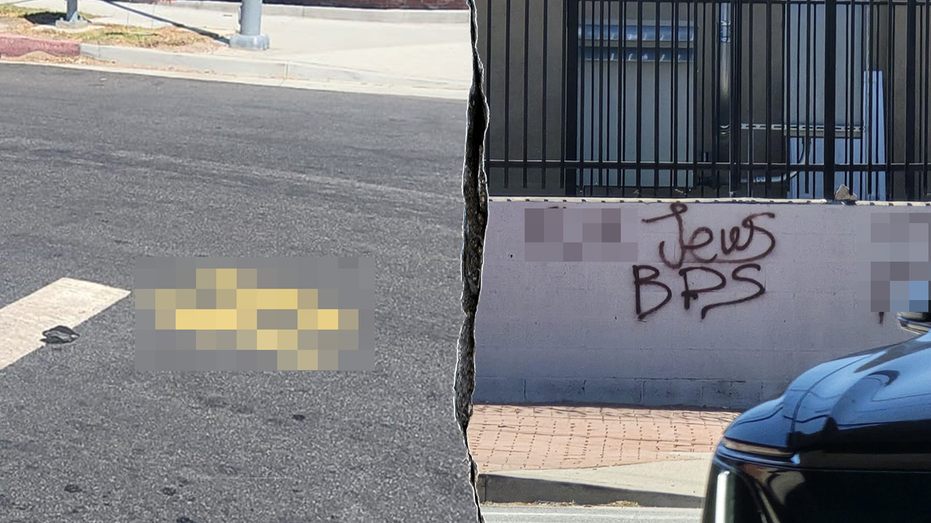
The Israeli-American Council headquarters in Los Angeles was vandalized with antisemitic graffiti over the weekend. The LAPD is investigating it as a possible hate crime.
1.5 k views
Vandals spray-painted swastikas, SS symbols, and the word "burn" on the sidewalk in front of the building. A cardboard snowman near the entrance was also defaced with a swastika.
Nearby, along an entrance to Highway 101, a separate barrier was tagged with an expletive-laced anti-Israel message referencing the Boycott, Divestment, and Sanctions (BDS) movement, along with additional swastikas scattered throughout the area.
The IAC said it is working with the LAPD's Topanga Division as part of the ongoing investigation.
According to the organization, security video from the scene captured an image of a possible suspect, which has been turned over to authorities.
In a statement, IAC CEO Elan S. Carr, former U.S. Special Envoy to Monitor and Combat Antisemitism, condemned the act in strong terms.
"We are appalled by this vile act of antisemitism at the doorstep of our own community and offices," Carr said.
"Around the world and across our country, we have seen an alarming and historic rise in antisemitism," Carr said. "We are working tirelessly to fight it and to ensure that history does not repeat itself."
Carr vowed that this incident would not scare them or keep them silent in standing up against hate crimes.
"This incident will not intimidate or deter us - on the contrary, it fuels our determination to stand even stronger against antisemitism and to protect and strengthen our community for generations to come," he said.
you may also like


- by foxnews
- 24 Sep 2026
America's best national parks for fall revealed - plus the NPS director's personal picks
travel
- by foxnews
- descember 09, 2016
One of history's most famous sayings about Rome may be wrong, new study suggests
The Roman Empire's vast road network favored Constantinople as a key overland travel hub, a study says, yet experts argue Rome remained the true center of power.
read more