- by foxnews
- 04 Apr 2026
Cartels fear US retaliation as Trump-era pressure reshapes strategy: 'They fear the United States'
Mexican drug cartels reportedly avoid targeting American tourists due to fear of U.S. retaliation, especially under Trump's terrorist designation.
1.9 k views
Mexican drug cartels have long operated with a primary objective: protect revenue streams and avoid actions that could trigger an overwhelming government response. Security analysts and former U.S. officials say that calculus often includes avoiding the deliberate targeting of American tourists and citizens inside Mexico.
"Of course, drug cartels are afraid of President Trump since he declared them terrorist organizations. That may be one of the reasons why they don't attack American citizens or tourists," cartel expert and activist Elena Chávez told Fox News Digital.
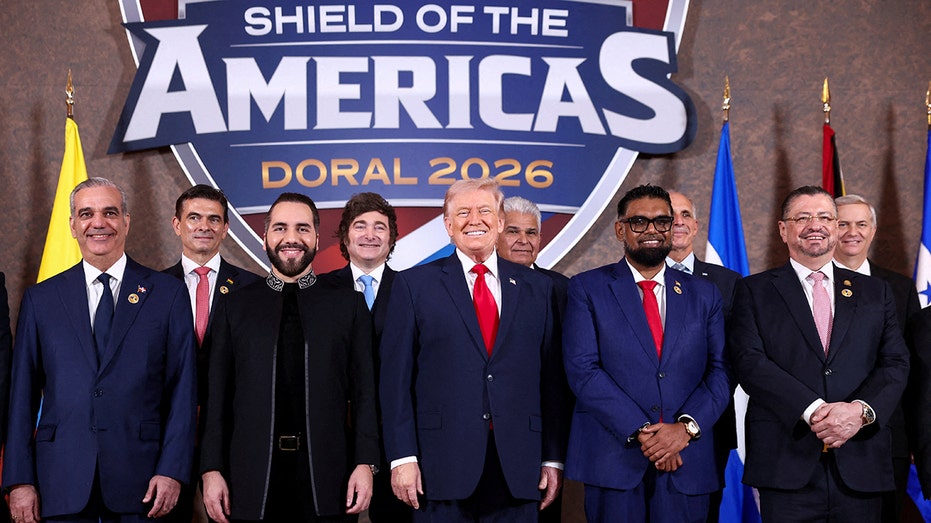
Adding to the pressure, Trump spoke Saturday at the newly minted Shield of the Americas Summit in Florida - a coalition of 12 Latin American and Caribbean nations - coming together to take on the cartels, among other policies.
"We have to knock the hell out of them because they're getting worse. They're taking over their country. The cartels are running Mexico. We can't have that. Too close to us," Trump warned.
"Right now, there must be more than a million Americans coming to Mexico to spend their vacations in their homes. The drug cartels don't mess with them or their homes. They know there's no way to avoid a reaction from the United States if they mess with its citizens. There's an unwritten rule that says you shouldn't mess with American citizens; if you do, you'll suffer retaliation from the United States. And even more so now with the Trump administration" Samuel González, national security expert and former prosecutor of the specialized unit on organized crime, told Fox News Digital.
While high-profile killings of Americans in Mexico have occurred, experts describe them as isolated and liabilities to cartel interests rather than part of a strategic campaign.
"This crime marked a turning point in the anti-drug relationship between Mexico and the U.S., prompting the DEA's 'Operation Leyenda' to capture those responsible and revealing the complicity between drug traffickers and high-ranking Mexican officials."
He added, "Another case is that of Agent Zapata. On Feb. 15, 2011, gunmen from 'Los Zetas' cartel killed Special Agent Jaime Zapata of Immigration and Customs Enforcement (ICE/HSI) and shot Agent Victor Avila on a highway in San Luis Potosi, Mexico. The murder triggered intense pressure from the United States on Mexico to combat the cartels, resulting in the capture of several implicated Los Zetas members, including Julián Zapata Espinoza, alias 'El Piolin.'
"All these precedents are examples of why the cartels learned that it is not in their best interest to attack American citizens."
Security experts say cartels closely monitor political rhetoric in Washington, particularly statements suggesting unilateral U.S. military action or expanded cross-border operations. Public debate over labeling cartels as terrorist groups has resurfaced in recent years, with some lawmakers arguing it would provide additional tools to disrupt financing and logistics networks.
Director General of the National Citizen Observatory, Francisco Rivas, told Fox News Digital: "Drug traffickers are much more afraid of attacking a foreigner than a Mexican because crimes against foreigners are prosecuted much more severely by the Mexican authorities. The greater media pressure when the victim is a foreigner creates more incentive for the police and prosecutors to investigate a kidnapping, extortion, disappearance or homicide."
"In Mexico, more than 90% of intentional homicides and disappearances are related to people who had specific contact with the cartels, primarily for business reasons. The problems tourists experience in Mexico are the same as they might encounter in Miami, London, Rome or Paris: robberies, fraud and even some extortion, but these are proportionally marginal. Most crimes suffered in Mexico are suffered by Mexicans, and most violent crimes involve Mexican victims linked to cartels," he said.
While millions of Americans travel to Mexico each year without incident, law enforcement officials emphasize that criminal violence remains widespread in regions where cartels operate.
Authorities on both sides of the border maintain that cartel decision-making is driven by financial incentives and survival calculations. Actions perceived as likely to trigger direct U.S. retaliation are widely viewed by analysts as counterproductive to those interests.
you may also like

- by foxnews
- 04 Apr 2026
Homan vows immigration mission 'won't skip a beat' as Bondi exits DOJ


travel
- by foxnews
- descember 09, 2016
Americans warned of potential attacks at vacation destination as border crossing exit fee doubles
The U.S. Embassy Cairo issued a security alert for Americans in Egypt. The action follows regional military operations in Iran and rising border exit fees.
read more