- by foxnews
- 01 May 2026
'Gigantic' ancient octopus used jaws to crush prey and hunted alongside the dinosaurs 100M years ago: study
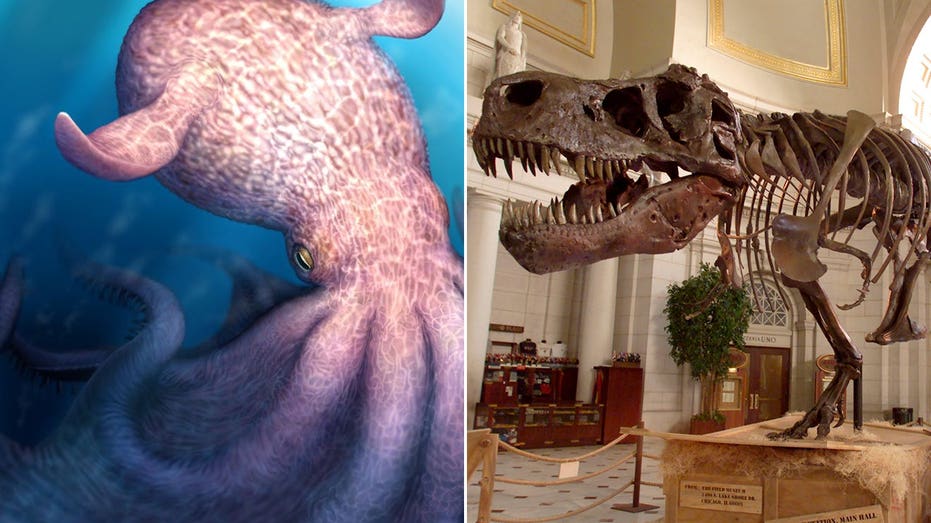
Octopuses' earliest relatives may have been gigantic predators hunting during the age of dinosaurs, according to new Hokkaido University research.
1.6 k views
Although scientists previously believed that the earliest finned octopuses lived around 15 million years ago, researchers with Hokkaido University found fossilized jaws inside Late Cretaceous rock samples, according to a study published in the journal Science Thursday.
Because octopuses are soft-bodied animals, they don't fossilize well except for the jaw bones, making their evolutionary history difficult to trace, the researchers explained in a news release.
The fossils belonged to a group of extinct finned octopuses known as Cirrata that researchers believed crushed their prey with powerful jaws.
"Our findings suggest that the earliest octopuses were gigantic predators that occupied the top of the marine food chain in the Cretaceous," Professor Yasuhiro Iba of Hokkaido University said.
Iba added that the most surprising finding was the "extent of wear on the jaws," which showed extensive chipping, scratching and cracking.
"In well-grown specimens, up to 10% of the jaw tip relative to the total jaw length had been worn away, which is larger than that seen in modern cephalopods that feed on hard-shelled prey," he explained. "This indicates repeated, forceful interactions with their prey, revealing an unexpectedly aggressive feeding strategy."
These findings change the way scientists view predators during the Late Cretaceous period, which they previously believed was dominated by vertebrate predators, with invertebrates at the bottom of the food chain.
"This study provides the first direct evidence that invertebrates could evolve into giant, intelligent apex predators in ecosystems that have been dominated by vertebrates for about 400 million years," Iba added.
you may also like




travel
- by foxnews
- descember 09, 2016
'Get off the plane,' Delta passengers chant at flyer who refuses to hang up phone
A Delta flight passenger refused to end a cellphone call while taxiing in Miami, leading to disruptive behavior and removal from the Atlanta-bound flight.
read more