- by foxnews
- 08 Apr 2026
China's grip on global shipbuilding sparks Trump maritime action plan aimed at reviving US industry
Trump administration unveils plan to reclaim U.S. maritime dominance as China controls global ship production and 99% of trade moves on foreign ships.
1.5 k views
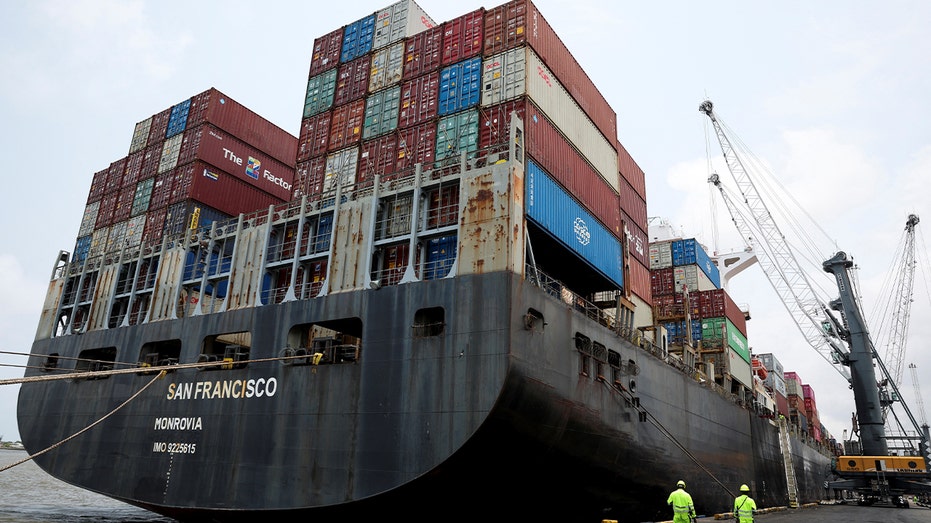
The Trump administration unveiled a sweeping maritime action plan Friday, aimed at reclaiming U.S. maritime dominance and reducing America's reliance on foreign-built and foreign-flagged ships that carry the vast majority of its international trade.
"Roughly 50% of our trade moves through the maritime domain, and 99% of that moves on foreign-built, foreign-owned and foreign-flagged ships," one senior administration official said during a call with reporters. "That's the market we're trying to tap."
The push comes as China now produces more than half of the world's commercial ship tonnage, while U.S. shipyards account for only a sliver of global output - a disparity that has widened over decades as American commercial shipbuilding declined.
Officials argued that rebuilding commercial shipbuilding capacity would have ripple effects beyond global trade, strengthening the broader industrial base that underpins U.S. naval power.
Throughout the past several decades, as American commercial shipyards shuttered or downsized, the domestic supplier network, skilled workforce and naval design expertise that support both commercial and military vessels also contracted, officials said. That contraction, they argued, has left Navy shipbuilders more dependent on smaller supplier pools and single-source components, contributing to rising costs and production delays.
"The cost of building U.S. Navy warships has gone up, far outpacing inflation," one senior administration official said, attributing part of the increase to the loss of adjacent commercial shipbuilding activity. By expanding commercial orders and modernizing shipyard infrastructure, officials said, the government hopes to create economies of scale that would benefit both commercial operators and the Navy.
Historically, some U.S. shipyards operated as dual-use facilities, building commercial vessels alongside Navy ships - a model that officials said helped sustain a larger workforce and more resilient supply chain. While the maritime action plan focuses primarily on commercial shipping, administration officials said they expect downstream benefits for military shipbuilding as the industrial base expands.
The decline in U.S. shipbuilding capacity has been decades in the making. Following World War II, the United States maintained dozens of major commercial shipyards. Today, only a small number remain capable of building large oceangoing vessels.
In the defense sector, production has consolidated into a handful of primary shipyards. Just two shipbuilders - Huntington Ingalls Industries' Newport News Shipbuilding in Virginia and General Dynamics' Electric Boat in Connecticut and Rhode Island - construct the Navy's nuclear-powered aircraft carriers and submarines. Surface combatants such as destroyers are built at only a few additional yards.
According to the Office of Naval Intelligence, China's shipbuilding capacity now exceeds that of the United States by more than 200 times - a gap analysts say reflects Beijing's heavy state investment in automated, AI-enabled shipyards capable of producing vessels at a pace the U.S. industrial base has struggled to match.
Meanwhile, the Navy continues to face submarine production delays and supply-chain bottlenecks that have slowed delivery of key programs, underscoring the challenges officials say must be addressed if the United States is to regain maritime competitiveness.
you may also like


- by foxnews
- 08 Apr 2026
Trump admin terminates some agreements with districts, college on transgender students



travel
- by foxnews
- descember 09, 2016
Bikini skiing takes off on slopes as record warmth forces resorts into survival mode
Western ski resorts face record warm temperatures and low snowfall, with skiers swapping jackets for bikinis and T-shirts as trails close and dirt replaces snow.
read more