- by foxnews
- 08 Apr 2026
How Trump's strikes against alleged narco-terrorists are reshaping the cartel battlefield: 'One-way ticket'
President Donald Trump's military strikes against Venezuelan drug vessels in the Caribbean force cartels to adapt operations and compete for resources.
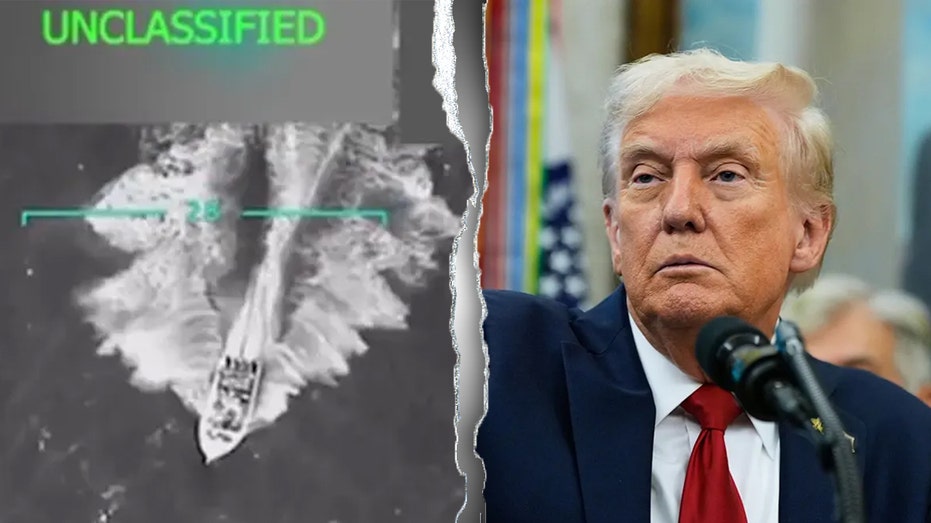
1.5 k views
These strikes ultimately will sow discord among these groups, disrupt key logistics for the cartel networks and put them on notice, according to experts.
"Every trafficker who boards one of these boats should wonder if this is a one-way ticket and this is his last trip. You know, think twice," Brian Townsend, a retired supervisory special agent with the U.S. Drug Enforcement Administration, told Fox News Digital Tuesday. "So, I think that helps. It's going to make finding crews more difficult because there's that lingering doubt in their head that this literally might be a one way ticket to my death."
Despite the strikes, Townsend said cartels are incredibly agile. But the additional pressure stemming from the Trump administration's heightened crackdown on drug flow provides an opportunity for the U.S. to deter them as the cartels navigate new protocols.
"The more we force them to adapt, it's going to provide the potential for more mistakes, more openings that we can exploit. … It degrades their infrastructure. It frustrates them," Townsend said.
The strikes also could intensify tension between cartels, who will now be competing for resources, according to Townsend. Specifically, cartels will likely struggle with recruitment as they seek pilots and captains and will be competing more directly with other groups who may offer greater pay or safer routes, he said.
Additionally, brokers and buyers could turn to a rival group if they can provide a more steady supply, Townsend said.
"This continued pressure exposes weaknesses and opportunities for rival groups to exploit. Cartels operate in a brutal, competitive environment," Townsend said. "Anything that destabilizes their illicit business model can lead to conflicts internal and external.
"We are not just stopping boats and destroying drugs meant to poison our communities. We are making them change their operations, and that will heighten animosity."
Additionally, the strikes could hamper business for groups like Tren de Aragua because the stakes might be too high, according to Nathan Jones, a nonresident scholar in drug policy and Mexico studies at Rice University's Baker Institute for Public Policy.
"One possibility is that there could be a chilling effect from other cartels doing business with Tren de Aragua or Cartel de Los Soles in the Caribbean," Jones said. "It might be viewed as too high risk and the groups as potentially unstable partners."
Still, Jones said that these strikes are unlikely to affect the flow of fentanyl into the U.S. since fentanyl precursors originate in China and then are produced in labs in Mexico, where they are then trafficked north, without entry into the Caribbean.
"I wouldn't expect your drug flow to be affected because of these strikes," Jones said. "This could, though, leave transnational criminal organizations running a little scared in terms of what the administration is going to do."
Still, Jones said that he predicted drug flow routes would adapt and that land or aerial drug routes would become preferable to sea routes transiting the Caribbean.
The strikes have attracted scrutiny from members of Congress, who have called into question the legality of the strikes. For example, senators Adam Schiff, D-Calif., and Tim Kaine, D-Va., filed a war powers resolution in September that would block U.S. forces from engaging in "hostilities" against certain non-state organizations.
"There has been no authorization to use force by Congress in this way," Schiff told reporters Wednesday. "I feel it is plainly unconstitutional. The fact that the administration claims to have a list and has put organizations on a list does not somehow empower the administration to usurp Congress's power of declaring war or refusing to declare war or refusing to authorize the use of force."
The measure failed in the Senate on Wednesday by a 48-51 margin.
"We have to put the traffickers and cartels on notice. … If you try to poison our people, we will blow you out of existence, because that's the only language they really understand," Trump told military leaders in Quantico, Virginia, Sept. 30. "That's why you don't see any more boats in the ocean. You don't see any boats around Venezuela. There's nothing."
you may also like
- by foxnews
- 08 Apr 2026
Trump admin terminates some agreements with districts, college on transgender students


travel
- by foxnews
- descember 09, 2016
Bikini skiing takes off on slopes as record warmth forces resorts into survival mode
Western ski resorts face record warm temperatures and low snowfall, with skiers swapping jackets for bikinis and T-shirts as trails close and dirt replaces snow.
read more