- by foxnews
- 07 Apr 2026
Trump's energy dominance rewrites the Strategic Petroleum Reserve after Biden drawdowns
Strategic Petroleum Reserve less critical to U.S. security as domestic oil production surges under Trump administration policies, economist Diana Furchtgott-Roth explains.
1.3 k views
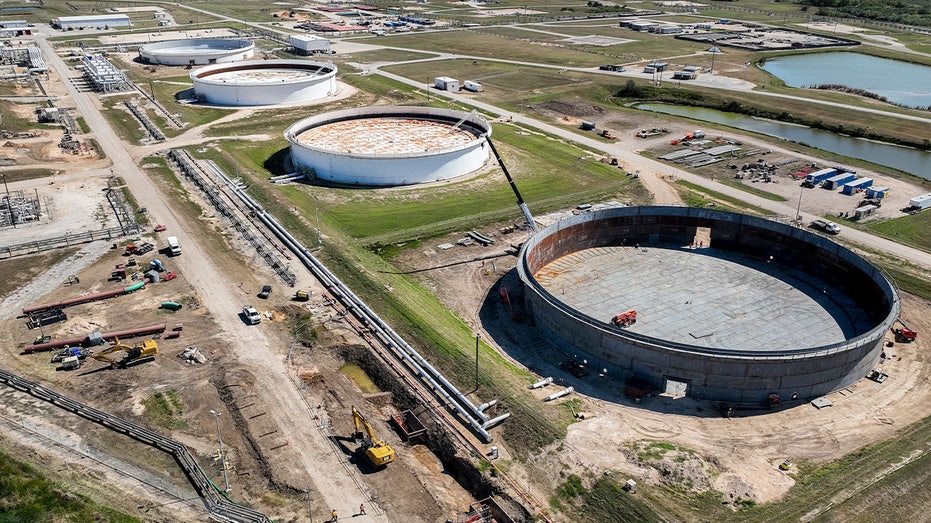
As the Trump administration works to gradually replenish the Strategic Petroleum Reserve following record releases under the Biden administration, Diana Furchtgott-Roth, director of The Heritage Foundation's Center for Energy, Climate and Environment, told Fox News Digital that the decades-old emergency oil stockpile no longer plays the same central role it once did.
"I don't think for the security of the United States, for the economy of the United States, I don't think the SPR is as important as it was 25, 30 years ago because now we are one of the greatest oil and natural gas producers in the world," Furchtgott-Roth said.
The U.S. became the world's largest natural gas producer in 2011, surpassing Russia, and then the top crude oil producer in 2018, overtaking Saudi Arabia and Russia - a surge driven largely by the shale revolution, which took off in the mid-to-late 2000s with the widespread use of horizontal drilling and hydraulic fracturing.
The Strategic Petroleum Reserve was created in the aftermath of the 1970s oil crisis to protect the United States from foreign supply shocks, at a time when the country relied heavily on imported oil. That dynamic has shifted dramatically as domestic production surged, turning the U.S. into the world's largest producer of oil and natural gas.
Furchtgott-Roth said the U.S.' shift to become an energy producer, combined with Trump's policies, have opened the floodgates of producing U.S. oil, which lessens the need for the Strategic Petroleum Reserve.
"We have the potential to produce a lot more, and we have a government that's supportive of that," Furchtgott-Roth said of the oil in the U.S. "It's now possible to fill the Strategic Petroleum Reserve, but I just want to say the biggest strategic petroleum reserves we have is right under our feet in places like Texas, New Mexico, Pennsylvania, Ohio. We have so much oil and natural gas in this country."
Since returning to office, Trump has used executive authority to fast-track domestic energy production, including signing an order titled "Unleashing American Energy" aimed at rolling back regulatory barriers and accelerating permitting for oil and gas projects. The administration also moved to restart and speed reviews of liquefied natural gas export approvals, reversing the Biden-era "pause" approach and positioning U.S. natural gas exports as a centerpiece of its energy strategy.
Biden ordered a 50 million-barrel release from the Strategic Petroleum Reserve in 2021, framing it as a move to ease gasoline prices and help relieve pandemic-era supply chain pressures after COVID-19 brought the global economy to a "near economic standstill."
He dramatically expanded the drawdown in March 2022, announcing a plan to release up to 1 million barrels per day for six months as gas prices climbed. The move came weeks after Russia's February 2022 invasion of Ukraine and subsequent Western sanctions targeting Moscow's energy sector. In total, Biden released roughly 300 million barrels from the Strategic Petroleum Reserve over his four years.
Trump repeatedly criticized Biden's Strategic Petroleum Reserve releases between his first and second terms, telling the New York Post in 2021 the reserve should be tapped only for "serious emergencies, like war, and nothing else."
He later pledged in his Jan. 20 inaugural address to "fill our strategic reserves up again right to the top" while driving prices down and expanding U.S. energy exports.
Furchtgott-Roth also criticized Biden's drawdowns, arguing the reserve was never meant to be used as a tool to manage consumer prices. She added that high energy prices during the Biden years were driven by domestic policy decisions.
"That's not what the Strategic Petroleum Reserve is supposed to be useful for," she said. "It's supposed to be used for a national security emergency. It's not supposed to be used because prices are too high. And in this case, it was a self-caused emergency caused by President Biden's different policies regarding oil and natural gas."
Meanwhile, the U.S. military successfully captured Venezuelan dictator Nicolás Maduro in January, with Trump shortly after announcing the U.S. would "run" the South American, oil-rich nation.
"This Oil will be sold at its Market Price, and that money will be controlled by me, as President of the United States of America, to ensure it is used to benefit the people of Venezuela and the United States! I have asked Energy Secretary Chris Wright to execute this plan, immediately. It will be taken by storage ships, and brought directly to unloading docks in the United States," Trump wrote.
An administration official told Fox Digital that refilling the Strategic Petroleum Reserve with Venezuelan oil is not currently under consideration.
Energy Secretary Chris Wright told FOX Business that the "we're going to bring more crude onto the marketplace" with Venezuelan oil.
"We're going to bring crude that's particularly well-suited for American refineries," he explained Friday. "It helps us build asphalt as well. All of those things, as you drive market prices down, and you drive supply up, that's helpful for giving us multiple ways to fill the Strategic Petroleum Reserve."
Furchtgott-Roth said Venezuela's power shift sent a powerful signal to U.S. adversaries, weakening Cuba's economy, cutting into Russia's oil revenues, limiting China's leverage in Latin America, and emboldening opposition movements in Iran by demonstrating Washington's willingness to confront authoritarian regimes.
She added that Venezuela's oil comeback would take time because production collapsed after the regime expropriated U.S. infrastructure and couldn't operate it, driving output from roughly 3.5 million barrels a day pre-Hugo Chávez to under 1 million today.
A Trump official explained to Fox Digital in December 2025 that the administration is working to "gradually" refill the Strategic Petroleum Reserve with oil, while citing significant "damage" left to the reserve following the Biden administration releasing millions of barrels of oil in 2021 and 2022.
Congress must appropriate funding to fully replenish the reserve. The Department of Energy currently has refill authority and funding under the so-called "big, beautiful bill," which set aside $218 million for maintenance and repairs and another $171 million to begin refilling the Strategic Petroleum Reserve.
you may also like
- by foxnews
- 07 Apr 2026
Iran war nears 'completion' as Trump eyes deadline - what the endgame could look like
- by foxnews
- 07 Apr 2026
Primary pause, political firestorm: High-stakes elections this month take center stage


travel
- by foxnews
- descember 09, 2016
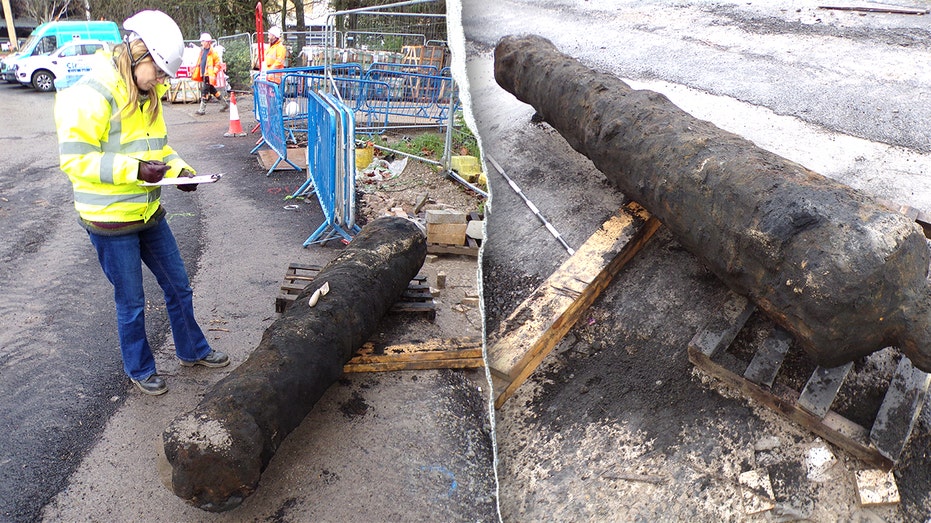
Construction crew unearths surprising 300-year-old cannon while digging in historic city
In only the third such discovery in 30 years, according to archaeologists, construction workers in Kingston upon Hull unearthed a rare 300-year-old cast-iron cannon.
read more