- by foxnews
- 07 Apr 2026
When anti-ICE clashes trigger federal intervention: Experts explain the constitutional breaking point
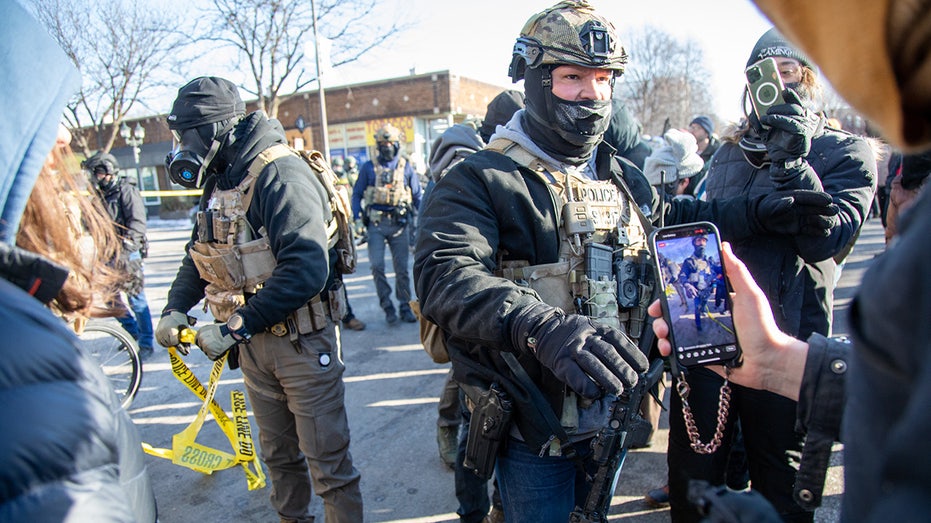
Legal experts say anti-ICE protests and political pushback in Minneapolis do not meet the legal threshold for a constitutional crisis or federal emergency powers.
1.3 k views
Legal analysts say the unrest, while volatile, does not inhibit the federal government's constitutional authority to enforce immigration law. That threshold would only be crossed if state officials themselves moved to block or materially obstruct federal agents, raising supremacy clause concerns.
Ilya Somin, a George Mason University law professor, told Fox News Digital that agitators hindering federal agents' work, even aggressively, does not rise to that level.
"There is no general principle of law which says that anything that makes the work of federal agents more difficult in any way somehow violates the Constitution," Somin said.
Protesters have taken to the streets of Minneapolis in recent weeks to confront immigration officers during Operation Metro Surge, a federal enforcement effort that has deployed thousands of ICE and Customs and Border Protection agents to Minnesota.
The dynamics at play have centered on two legal principles. On one hand, the anti-commandeering doctrine prevents the federal government from forcing state and local officials to enforce federal law. On the other, obstruction of federal law enforcement is unlawful and could violate the supremacy clause, which says federal law trumps state law when the two are in conflict.
Operation Metro Surge began in December, sending 3,000 immigration agents to Minneapolis and St. Paul. The effort has led to thousands of arrests, but it has spurred resistance from residents and resulted in two high-profile deaths of U.S. citizens at the hands of immigration agents, which fueled further public outrage. The FBI is now investigating those incidents.
Democratic state leaders, meanwhile, have widely criticized the operation and drawn blame from Republicans for exacerbating tension with their rhetoric. At one point, Democratic Minnesota Gov. Tim Walz compared ICE's presence to the Civil War.
Asked whether the resistant nature of Minnesota's Democratic leaders could amount to "nullification," Somin rejected the idea.
"Nullification is when the state officials themselves resist the enforcement of federal law. If they merely fail to help the feds against private parties, that is something that's protected by the anti-commandeering principles of the Tenth Amendment," Somin said.
That hands-off approach has extended beyond rhetoric. Walz has welcomed a reduction in federal personnel but urged a faster drawdown, while Minneapolis Mayor Jacob Frey has said the city would not assist with immigration enforcement.
As state and local leaders have declined to intervene, opposition to the ICE operation has increasingly taken shape on the ground. Activists have mobilized to confront and monitor federal immigration agents, activity that legal experts distinguish from unlawful, state-led obstruction.
In addition to street confrontations, activists have staged protests at sensitive locations, including a disruption of a church service in St. Paul, where the pastor is also an ICE field director. Several participants, including former CNN anchor Don Lemon, were arrested and charged under a federal statute typically used to protect abortion clinics and pregnancy counseling centers.
Even so, legal experts stress that, so far, all the anti-ICE activity falls short of a collapse of federal authority. Hans von Spakovsky, a senior legal fellow at Advancing American Freedom, said existing laws already prohibit "mob" violence and obstruction, adding that Minnesota leaders' approach has been "irresponsible" but not illegal.
Should unrest intensify, the Trump administration has floated the Insurrection Act, a rarely used provision that allows the president to respond to unlawful obstructions of federal authority. The president has said that while it remains an option, it is not currently necessary.
Trump's border czar, Tom Homan, who is leading immigration operations in Minneapolis, likewise downplayed the impact of anti-ICE agitators.
"You're not going to stop ICE. You're not going to stop Border Patrol," Homan said. "These roadblocks they're putting up? It's a joke. It's not going to work, and it's only going to get you arrested."
Fox News contributor Jonathan Turley spelled out when the Insurrection Act could be appropriate, noting it was deferential to the president.
"The establishment of roadblocks and direct interference with the enforcement of federal laws can support such an invocation," Turley said. "During the Civil Rights period, opposition to and obstruction of civil rights laws justified the use of military force."
Still, Turley and others emphasize that the Minnesota protests, as intense and at times chaotic as they have been, do not yet meet the criteria for such drastic federal action.
"The promise of some Democratic leaders to arrest and prosecute ICE agents is likely to fail. Roadblocks to bar federal agents would also constitute obstruction and, if supported by the state, would violate the constitutional authority of the federal government," Turley said.
you may also like
- by foxnews
- 07 Apr 2026
Iran war nears 'completion' as Trump eyes deadline - what the endgame could look like
- by foxnews
- 07 Apr 2026
Primary pause, political firestorm: High-stakes elections this month take center stage

travel
- by foxnews
- descember 09, 2016
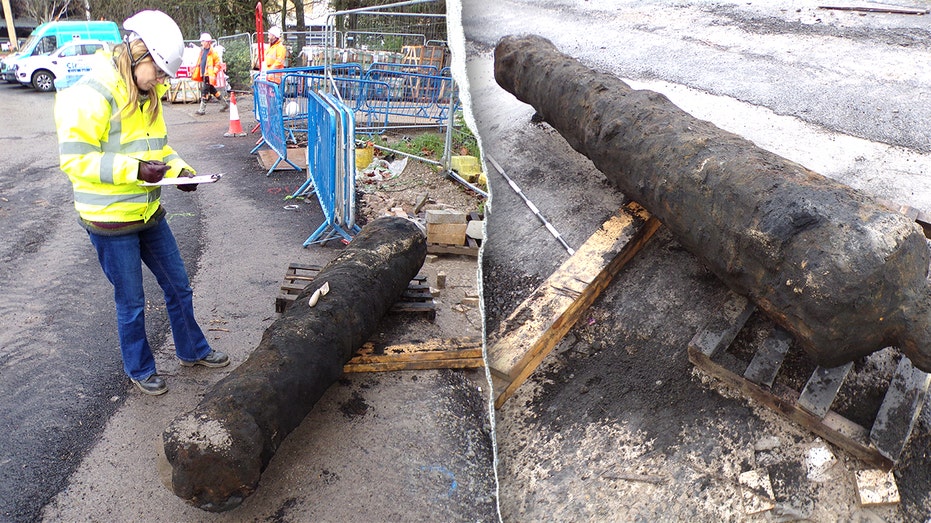
Construction crew unearths surprising 300-year-old cannon while digging in historic city
In only the third such discovery in 30 years, according to archaeologists, construction workers in Kingston upon Hull unearthed a rare 300-year-old cast-iron cannon.
read more