- by foxnews
- 02 Apr 2026
'Unexpected' Roman-era discoveries unearthed in biblical city mentioned in Book of Revelation
A rare Roman-era marble bathtub and statue fragment were recently discovered in ancient Ephesus, Turkey, where Paul the Apostle preached. Archaeologists shared insights.
1.6 k views
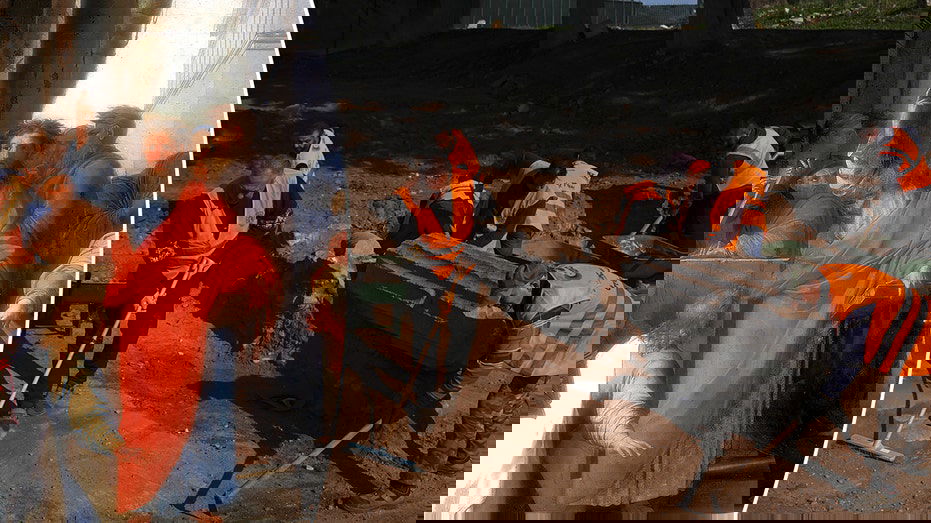
The star of the excavation was a Roman-era marble bathtub, along with a fragment of a male statue's torso that was later reused as a paving stone.
Archaeologist Serdar Aybek, speaking to AA, said the bathtub dates back to the first century A.D. Unlike Ephesus's large, public bath complexes, the one that was recently uncovered was likely "intended for domestic use."
"We believe it belonged to the Terrace Houses and was used in the first century A.D.," he added. "We found it during work at the theater, and its size shows it was used in a house."
The bathtub was carved with Greco Scritto marble - a regional variety with distinct black veins - and measured almost 5 feet long, 2.5 feet wide and 2 feet high, authorities said.
After being used by a high-income household, the bath was later repurposed as a fountain trough.
Aybek also described the discovery of the statue fragment, which dated between the first century B.C. and the first century A.D., as "completely unexpected."
The statue of the unidentified man was carved into multiple parts and attached together before it was later dismantled.
Archaeologists found it face-down - and said it was used as a paving stone in the roadway.
The discoveries have come on the heels of many recent Asia Minor discoveries linked to early Christian history.
you may also like
- by foxnews
- 02 Apr 2026
Stubborn stroller sparks chaotic airport showdown with baggage handlers in viral video

- by foxnews
- 01 Apr 2026
Sharks in Bahamas found to have cocaine and other drugs in their systems, study says


travel
- by foxnews
- descember 09, 2016
Birth tourism industry thrives in Miami as Supreme Court showdown gets underway
Birth tourism is a booming concierge industry as Trump's Executive Order 14160 on birthright citizenship faces a Supreme Court challenge in a major case.
read more