- by foxnews
- 03 Apr 2026
China's High-Speed Rail Revolutionizes Beijing-Shanghai Corridor, Surpassing Air Travel in Passenger Volume and Revenue: See New Report
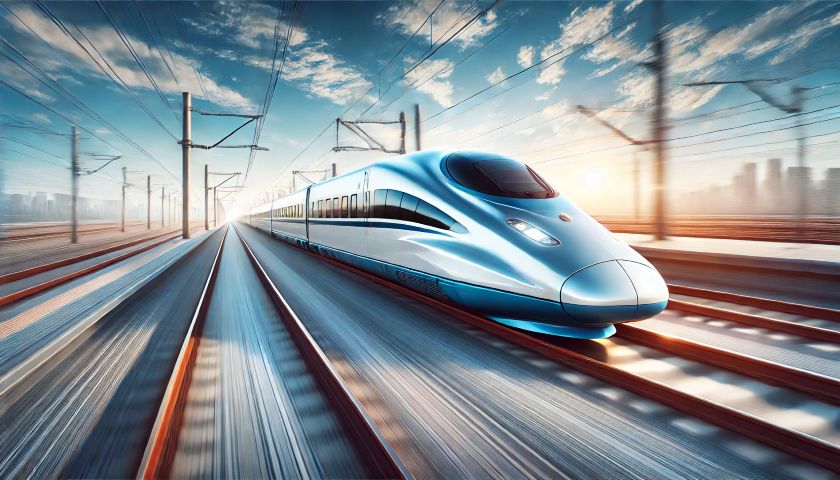
China’s high-speed rail (HSR) network is revolutionizing travel along one of its busiest and most essential routes — the corridor linking Beijing and Shanghai. Recent official data show that a growing majority of passengers prefer traveling by train over flying, valuing the speed, comfort, and convenience that modern rail service provides. This surge in rail travel is reshaping the domestic transportation landscape and exerting significant pressure on the aviation sector.
- by travelandtourworld
- 26 May 2025
- in travel
1.5 k views
In 2024 alone, more than 52 million passengers chose to travel by train between Beijing and Shanghai. In comparison, only around 8.6 million flew the same route, highlighting the dominance of high-speed rail in this key corridor. The rail network̢۪s extensive timetable features over 100 trains daily, many reaching speeds up to 217 miles per hour (350 kilometers per hour), offering unparalleled convenience for travelers.
The Beijing–Shanghai high-speed line is not only a passenger favorite but also a financial powerhouse. It generated close to $5.9 billion in revenue during 2024, with net profits climbing by over 10% to reach $1.79 billion. These figures underscore the efficiency and sound investment behind China’s modern rail infrastructure.
Strong revenue streams from this route enable continuous reinvestment into technology upgrades and service enhancements, boosting passenger satisfaction and operational reliability. The success of this corridor sets a benchmark for high-speed rail initiatives both within China and globally.
While rail enjoys this growth, China̢۪s airlines are grappling with their own challenges. Frequent weather-related disruptions and increasingly congested airspace have led to delays and cancellations on flights between Beijing and Shanghai. Such issues have driven passengers to opt for the more dependable and hassle-free rail services.
Industry experts and government agencies have raised concerns that without substantial improvements, airlines could continue to lose market share to high-speed rail. In response, carriers like China Eastern Airlines and Air China have enhanced their services by adding limousine transfers and revamping frequent flyer programs to retain customer loyalty. Moreover, in an effort to stay competitive, some airlines have reduced ticket prices below those of trains on selected routes.
China Railway is continuously working on improving scheduling efficiency and increasing train availability to accommodate the country̢۪s booming economy, where fast, flexible, and reliable intercity transportation is more crucial than ever.
With China̢۪s economy rapidly expanding and urban centers growing, well-functioning transport corridors linking megacities like Beijing and Shanghai become vital arteries for economic and social activity. The clear preference for high-speed rail on this route reflects a global trend toward sustainable and passenger-friendly travel solutions.
Looking ahead, enhancements to the rail system will likely continue, with trains becoming faster, more frequent, and equipped with upgraded amenities. At the same time, airlines will innovate and refine their offerings to compete, focusing on factors like convenience, price, and travel experience.
you may also like


- by foxnews
- 03 Apr 2026
Coin used as bus fare turns out to be 2,000-year-old relic, its journey still a mystery
- by foxnews
- 03 Apr 2026
Cruise lines cancel sailings, reroute ships as Middle East conflict disrupts voyages


travel
- by foxnews
- descember 09, 2016
Hidden NYC tunnel tied to Underground Railroad at risk of 'significant damage,' advocates warn
Engineers warn an Underground Railroad passageway found at NYC's Merchant's House Museum in Manhattan is threatened by a proposed nine-story development next door.
read more