- by foxnews
- 31 Aug 2026
Discoveries that reshaped what historians knew about America's Founding Fathers
Discoveries from DNA testing, archaeology and archival research have reshaped what historians know about Jefferson, Washington and other Founding Fathers.
1.6 k views
Over the past century, discoveries have offered fresh insight into America's founders, changing how historians understand their lives and legacies, as detailed below.
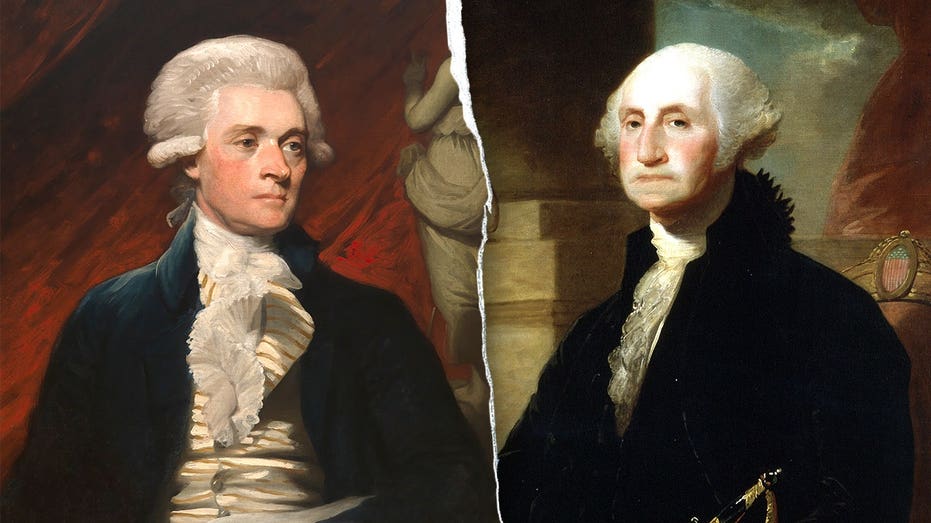
According to the Thomas Jefferson Foundation (TJF), Thomas Jefferson, principal author of the Declaration of Independence, fathered at least six children with Sally Hemings, an enslaved woman at Monticello.
Though it was rumored during his lifetime that Jefferson fathered children with one of the enslaved women, it wasn't until a landmark 1998 DNA study that historians found scientific evidence that appears to support the claim.
Hemings was brought to Paris from 1787 to 1789 to work as a servant and maid for Jefferson's household.
"Decades later, Jefferson freed all of Sally Hemings's children ... [he] did not grant freedom to any other enslaved family unit."
After reviewing documentary, scientific, statistical and oral history evidence, the Foundation concluded that Jefferson most likely fathered Hemings' children, a position now widely accepted by mainstream historians.
Not all historians agree with that assessment, however.
After reviewing historical evidence, the Thomas Jefferson Heritage Society concluded that Hemings "was only a minor figure in Thomas Jefferson's life and that it is very unlikely he fathered any of her children," according to the TJF website.
"This committee also suggested in its report, issued in April 2001 and revised in 2011, that Jefferson's younger brother Randolph (1755-1815) was more likely the father of at least some of Sally Hemings's children," the website adds.
Historians had long known that Washington operated a distillery through surviving records, but the archaeological excavation revealed the scale and sophistication of the operation.
The facility was "one of the largest, highest producing operations in the area," Mount Vernon's website says.
"The evidence also highlights the fact that this distillery was operating at an industrial scale, compared to the one or two still farmer-distillers common in the 18th and early 19th centuries," the site adds.
During the excavation, archaeologists uncovered stone foundations, teacups, drinking glasses and evidence of the distillery's copper stills and boilers, which helped researchers reconstruct how the massive operation functioned.
"This entrepreneurial spirit can be seen in such exhibits as the 16-sided treading barn, the gristmill and the distillery."
In 1947, historian Julian P. Boyd discovered a previously unknown draft of the Declaration of Independence among Jefferson's papers.
The Library of Congress's website describes the draft as "brief, but critically important," noting that it predated the famous "Rough Draught" Jefferson later produced.
Comparing the older fragment and the "Rough Draught," the historian found that Jefferson revised his language more extensively than previously documented.
The fragment also gave historians a clearer picture of the drafting process, helping them trace Jefferson's edits alongside revisions made by John Adams, Benjamin Franklin and Congress before the Declaration's adoption.
"Heavily edited in Jefferson's clear, precise hand, the fragment proved to be a key component in unraveling the story of the writing of the Declaration," the website notes.
"The existence of the fragment confirmed the view of those historians, who had argued that a heavily edited draft must have preceded the copy Jefferson had endorsed as the original rough draft."
you may also like
- by foxnews
- 31 Aug 2026
Potential security threat prompts US travel suspension for border city on alert
- by foxnews
- 31 Aug 2026
Police operation takes unexpected turn when officers stumble upon ancient burial cave

travel
- by foxnews
- descember 09, 2016
Popular beach town rejects noise, trash and traffic as it weighs stricter vacation rental rules
Pensacola Beach residents say large vacation rentals sleeping 30-40 guests drive noise, parking and trash problems as officials weigh a strict new registry.
read more