- by foxnews
- 25 Sep 2026
Long-lost sanctuary to Greek god discovered by archaeologists: 'Larger than life'
Cypriot officials announced the recent excavation of a long-forgotten sanctuary to Apollo, offering insights into ancient rituals and architectural expansions.
1.3 k views
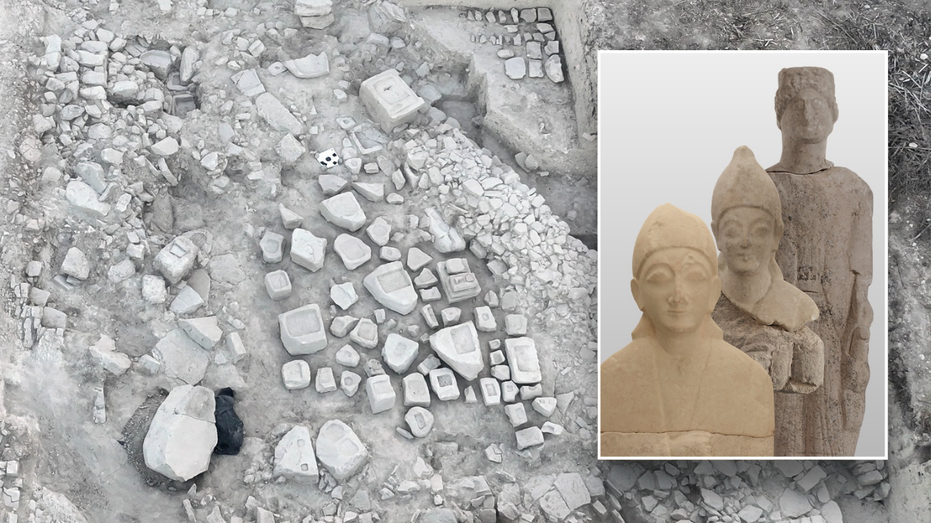
Archaeologists recently made numerous "spectacular" discoveries at a long-forgotten temple to an Ancient Greek god, according to local officials.
The Department of Antiquities in Cyprus shared a Facebook post about the latest excavation on April 28. The site, the Sanctuary of Apollo at Frangissa, was first discovered in the 19th century before it was subsequently lost, the group said.
A German archaeologist named Max Ohnefalsch-Richter found the sanctuary in 1885, which the Department of Antiquities described as "one of the most spectacular finds of his time."
But the 19th-century excavation was hastily done - and Ohnefalsch-Richter covered the sanctuary up with dirt to preserve it. It was soon forgotten.
"As the excavator completely covered the sanctuary, including the statue bases and walls, its location was eventually forgotten," the Facebook post noted.
German archaeologists began a new search for the site in 2021. It was eventually found, and the latest excavation of the site recently wrapped up.
This year, excavators found numerous statues of massive proportions, as well as votive statues that were found in the backfill area from 1885.
"In the process, the walls of the dedication courtyard and over 100 statue bases, some of colossal size, were uncovered in large areas," the department said.
Archaeologists also recently found "completely new types of statues" that were previously unknown. They plan to restore them to their original appearance.
"The discovery of clearly larger-than-life feet, for example, means that the existence of colossal male limestone figures from archaic times can now be proven," the press release added.
"Such larger-than-life figures were previously only known here in Frangissa made from terracotta, including the famous 'Colossus of Tamassos' in the Cyprus Museum exhibition."
The statues also contained inscriptions in particular languages that give historians an idea of how old they were - possibly as far back as 2,700 years ago.
"It shows that the sanctuary played an important role not only in archaic times (7th and 6th centuries B.C.), but also after the end of the Cypriot kingdoms."
Archaeologists also believe that the site went through a significant expansion during the end of the Cypriot kingdoms, which can be observed in the architecture.
"During this time, a large peristyle courtyard was built next to the votive offering room, which was probably used for banquets."
The statement also said that "apparently" the "court had several phases of construction and utilization."
you may also like
- by foxnews
- 25 Sep 2026
Mayday call captures pilot's urgent warning before aircraft goes down off coast


travel
- by foxnews
- descember 09, 2016
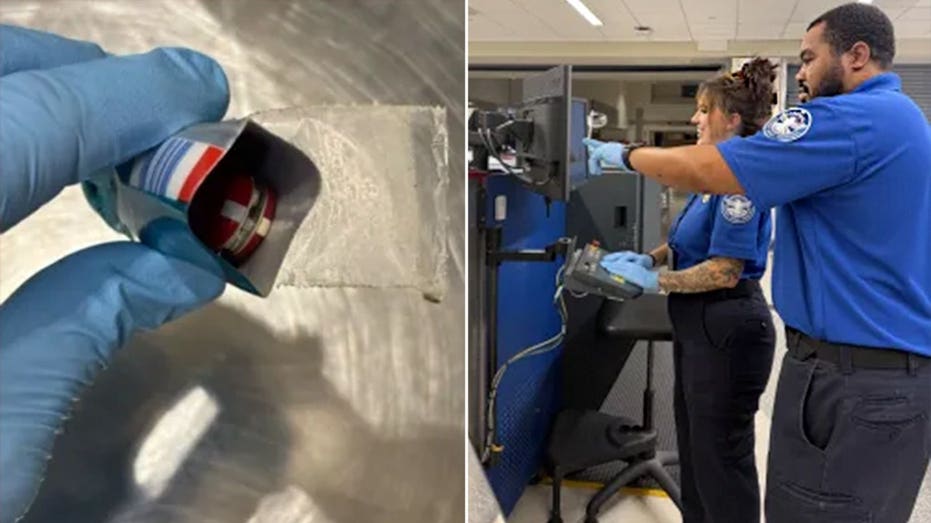
Sharp weapon discovered by TSA tucked inside unusual item in passenger's carry-on bag
A pocketknife hidden inside a flight passenger's toothpaste tube in a bag was flagged during X-ray screening at Dallas Love Field after a TSA officer spotted a metal object.
read more