- by foxnews
- 07 Apr 2026
Once-in-a-century treasures dating back 4,500 years unearthed in legendary city
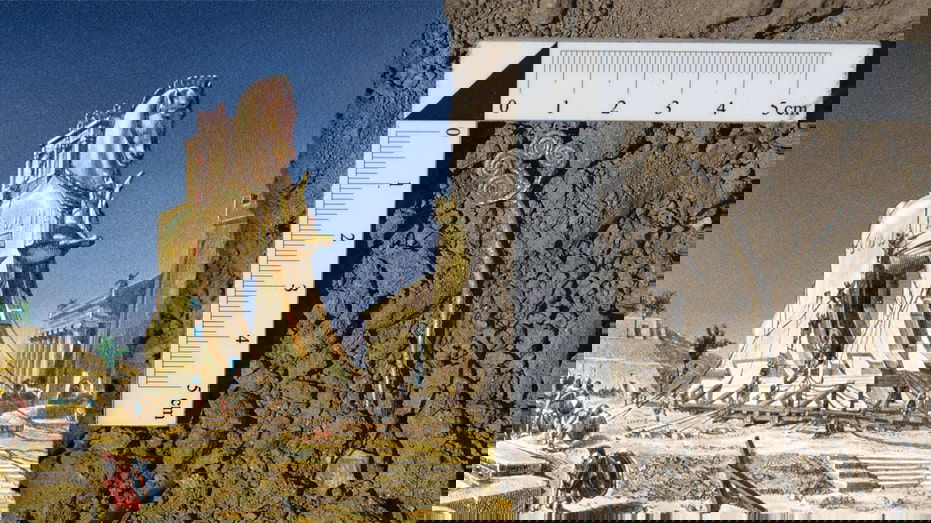
Turkish archaeologists discovered a golden brooch and rare jade stone in Troy's 2,500 B.C. settlement layer, providing new insights into the ancient city's pre-Greek civilization.
2.0 k views
Turkish officials recently unveiled a gleaming gold brooch and a rare jade stone in Troy - a remarkable breakthrough that sheds light on the city's pre-Greek past.
The Turkish Directorate of Communications announced the new finds in a Sept. 30 release, citing Anadolu Agency.
The artifacts were found in the Troy II settlement layer, which dates back to 2,500 B.C. - some 4,500 years ago.
Turkish officials say the discovery also sheds light on "the long-standing debate regarding the beginning of the Troy II period," which is usually cited as being between 2550 and 2500 B.C.
In an X post, Mehmet Nuri Ersoy, the Turkish minister of culture and tourism, lauded the discovery of the brooch.
He said that jade stones, like the one recently found, were seen as luxury items in antiquity.
The gem was not native to Anatolia, suggesting it arrived through long-distance trade.
Troy was added to the UNESCO World Heritage List in 1998.
"Its extensive remains are the most significant and substantial evidence of the first contact between the civilizations of Anatolia and the burgeoning Mediterranean world," UNESCO says.
you may also like

- by foxnews
- 07 Apr 2026
White House Egg Roll for Easter features Trump family members amid festive celebration



travel
- by foxnews
- descember 09, 2016
Construction crew unearths surprising 300-year-old cannon while digging in historic city
In only the third such discovery in 30 years, according to archaeologists, construction workers in Kingston upon Hull unearthed a rare 300-year-old cast-iron cannon.
read more