- by foxnews
- 21 Sep 2026
After 6 months of war, US must prepare for a future after Iran's government falls
The IRGC, Mojtaba Khamenei and Masoud Pezeshkian compete for power as Iran's Islamic Republic fights for survival amid escalating war and sanctions.
1.4 k views
Iran increasingly resembles not a Shiite theocracy protected by soldiers, but a militarized dictatorship in which the notorious clerical establishment provides ideological cover for the men with guns.
The Shiite Republic or Islamic Caliphate of mullahs emerged from the bleak winter of 1979 promising salvation and delivering coercion. Khomeinism turned political Islam into state power and terrorism, proxy warfare and revolutionary expansion into instruments of foreign policy. For nearly half a century, Tehran built armed transnational terrorist networks abroad while suffocating political life at home.
Economic pressure may accelerate the regime's exhaustion, but the deeper crisis is political and psychological: the widening gulf between a society seeking a place in the modern world and a ruling establishment imprisoned by the fears and obsessions of 1979.
Another uprising therefore cannot be excluded. No one can predict when humiliation overcomes fear and private anger becomes public defiance; history rarely announces revolutions in advance. Iran is under immense pressure: grievances have accumulated, the regime's legitimacy has eroded, and successive uprisings have not been erased because repression has quieted the streets. The regime has contained anger, but not the conditions that produced it. Silence should never be mistaken for consent.
Yet the collapse of dictatorship and the birth of democracy are different historical events. Between them lies the dangerous terrain of transition. Iran's next political order must be chosen by Iranians at the ballot box, not manufactured in Washington, Jerusalem, Moscow or Beijing.
Nor does every opposition faction carry equal political weight or vision. In my assessment, Crown Prince Reza Pahlavi occupies a distinctive position through his national visibility and advocacy of secular government, territorial integrity and democratic transition. His role and Iran's constitutional future - republic or constitutional monarchy - must be decided by Iranians. Regime change should restore a nation's right to choose, not merely destroy an old order.
Nor would the Islamic Republic's collapse automatically bury the ideologies that have poisoned Iranian politics for decades. Islamism, authoritarian Marxism, sectarianism and separatism would compete for the vacuum. Democracy requires citizenship above ideology, national belonging above faction and the state above revolutionary militias. Iran's transition will be difficult because the Islamic Republic has spent decades destroying the institutions a peaceful transition would need.
Washington's record deserves scrutiny. Successive administrations have oscillated between confrontation and the hope that another negotiation might alter the regime's character. Diplomacy can prevent wars, but the illusion begins when a tactical bargain is mistaken for strategic transformation. Tehran has learned to negotiate in one room while applying pressure in another, speaking diplomacy while preserving asymmetric warfare. A regime's method of survival should not be confused with a change in its nature.
The deeper lesson reaches back to 1979. Washington misunderstood not only the revolutionaries seizing power but the institutional rupture they were about to impose on one of the Middle East's oldest nations. It was more than an intelligence failure; it was a failure of political imagination.
Nearly half a century later, America should not again imagine only two futures - accommodation with the Islamic Republic or chaos after it. Serious statecraft should prepare for a third: political transition that preserves Iran's territorial integrity, national identity and continuity as a unified state.
Any regional strategy begins with understanding Iran itself. American and Israeli policymakers - and the intelligence communities that inform them - should distinguish democratic Iranian nationalism from Islamist, Marxist, sectarian and separatist movements offering different futures for the country.
Iran's territorial integrity and credible democratic actors should be understood before transition begins, not after institutions collapse. History is unforgiving toward governments that prepare for yesterday's crisis; the worst morning to search for reliable Iranian interlocutors is the morning after a dictatorship loses control.
Hormuz, the Houthis, Tehran's terrorist proxy networks, sanctions and war are not separate crises. They are consequences of the revolutionary order born in 1979, when ideology became an instrument of domestic rule and foreign policy. For decades, the West has confronted those consequences without resolving the underlying strategic problem.
The question after six months of war, therefore, is not merely how it ends, but what begins afterward. Iran's future belongs to Iranians, but serious statecraft requires contemplating a future beyond the Islamic Republic. For nearly half a century, the world has built its Iran policy around the regime's presumed survival. Beneath it stands a far older nation seeking to reclaim its political future. America need not write that future. It should ensure that when history next knocks on Iran's door, Washington is not once again the last to understand what has arrived.
you may also like


- by foxnews
- 21 Sep 2026
Midterm history massively favors Democrats. But they are making a big mistake

- by foxnews
- 21 Sep 2026
Trump should press Xi on China's persecution of believers at home and abroad
travel
- by foxnews
- descember 09, 2016
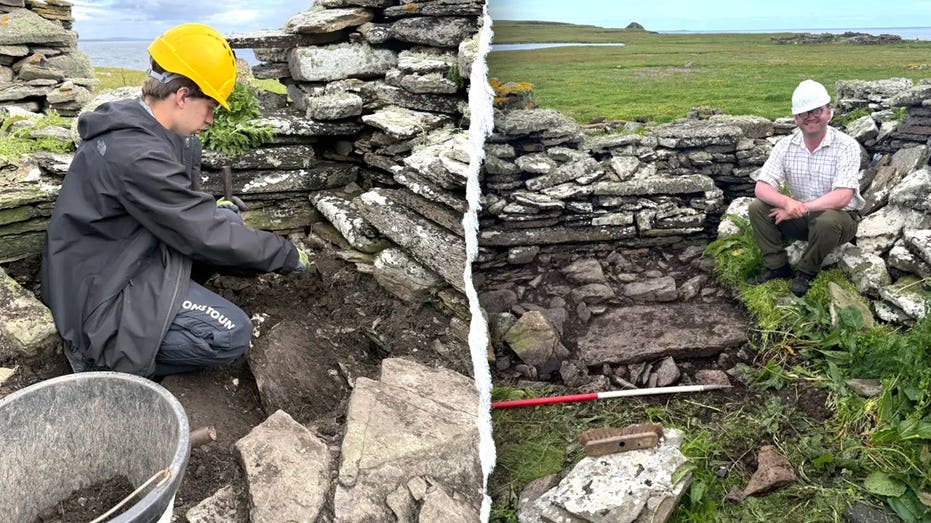
1,000-year-old church mystery cracked by students from King Charles' alma mater
Gordonstoun students in Scotland uncovered altar foundations inside ruins on the deserted island of Swona in Orkney, revealing a likely Viking-era church.
read more